

Tax season is the busiest stretch of the year on Central Valley car lots, and the reason is simple: the average federal refund reached $3,276 during the 2026 filing season, which is enough to cover a full down payment on a used car by itself. But busy is not the same as cheap. Wholesale used-vehicle values climbed 4.8% between December 2025 and March 2026, so the money shows up at the exact moment prices are firmest.
That trade-off is the whole story of tax season car buying, and it is why the best time to buy a used car in CA depends on whether you are optimizing for price or for approval. This guide covers both sides with 2026 numbers — when refunds actually land, what happens to inventory in February and March, and how a refund changes the loan math against how much of a down payment a used car really needs. It also covers the two federal tax rules that changed for 2026, and how a dealership's used car financing department can stretch a refund further than the window sticker suggests.
The Short Answer
If your refund is what funds the down payment, February through April is the best time to buy — you have the cash, lenders can verify it, and selection is at its widest point of the year. If you already have cash and want the lowest price, late fall and December are cheaper, because demand falls off and dealerships are clearing year-end inventory. Most Central Valley buyers are in the first group, which makes timing the refund well far more useful than waiting for a quieter market.
Why Tax Season Turned Into Car Buying Season
For a lot of working households, the tax refund is the largest single deposit of the year — bigger than any paycheck, bonus, or savings milestone. The IRS issued 99.1 million refunds worth $324.8 billion during the 2026 filing season, and the average came to $3,276, up 11.5% from the year before. That money is not spread across twelve months. It lands in a window that runs from late January to mid-April.
Dealerships and lenders have built their calendars around that window. Cox Automotive's chief economist described the 2026 spring market plainly: prices at wholesale auction started moving higher as dealers anticipated strong demand from higher tax refunds. Lots buy inventory in January and February expecting refund shoppers, lenders get slightly more flexible because down payments become verifiable, and the heaviest promotions of the year get pushed into that same stretch.
Refunds Arrive in a Cluster
Nearly 100 million refunds were paid during the 2026 season, most inside the ten-week run between the filing season opening and the April deadline
Dealers Stock Up for It
Inventory buying ramps through January and February, which is why the widest selection of the year is usually on the lot by late February
Lenders Get More Flexible
A refund deposit sitting in your bank statement reads as verified down payment funds, which strengthens an application at every credit level
The practical upshot is that tax season is when the most people can get approved, not when cars are cheapest. If your refund is the difference between shopping now and waiting another year, that is a trade worth making — and it is exactly why low down payment cars near Visalia and Tulare move fastest in the first quarter.
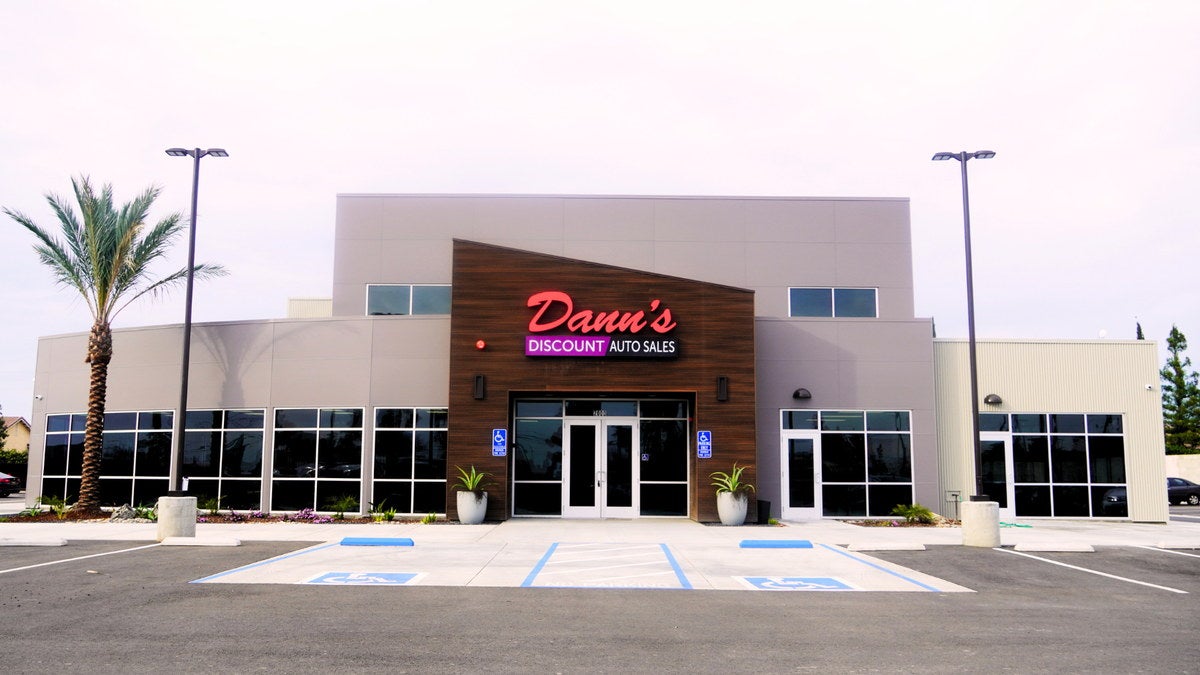
Family-owned since 2008, with three Tulare County lots and financing built around whatever your refund covers
Is Tax Season Really the Best Time to Buy a Used Car in CA?
Here is the part most tax season guides skip. The Manheim Used Vehicle Value Index, which tracks what dealers pay at wholesale auction, closed December 2025 at 205.5 and reached 215.3 by March 2026 — a 4.8% climb in three months and the highest reading since the summer of 2023. Values were up 6.2% year over year, and March alone moved 1.4%, well above the historical norm for that month.
Supply tightens at the same time. Used-vehicle days' supply dropped below 40 in March 2026, the lowest point of the year, while wholesale sales conversion hit 68.2% — 4.6 percentage points above the three-year March average. Translated into a Saturday on the lot: more buyers, fewer cars, less room to negotiate. The squeeze is worst at the affordable end, where vehicles priced under $15,000 made up just 16.4% of national used inventory in July 2026, down from 20.6% a year earlier, with supply in that band off 20% year over year. Certain segments empty out first, too: in an agricultural county like Tulare, work-capable used pickup trucks near Visalia and Tulare disappear early because refund season overlaps with the spring work ramp-up, and family-sized options and used cars under $20,000 follow close behind, since that price band is where most refund budgets actually land.
| Time of Year | What the Used Market Does | Who It Favors |
|---|---|---|
| January | Early refunds start arriving while prices sit near winter lows | Early filers who want first pick of fresh inventory |
| February – April | Peak refund demand, widest selection, firmest prices | Buyers using a refund as the down payment |
| May – August | Summer demand keeps values elevated through the season | Shoppers who can wait for a specific vehicle |
| September – October | Model-year changeover pushes fresh trade-ins onto lots | Value hunters with cash already in hand |
| November – December | Foot traffic slows and year-end clearance begins | Buyers optimizing purely for the lowest price |
So both answers are true at once. The cheapest month to buy a used car in California is usually December, and the best month to buy one is whichever month you can actually close a deal in. If a refund is what makes the purchase possible, chasing a December discount you cannot fund is not a strategy — it is a year without a car.
How to Time Your Refund So It Buys More Car
The calendar is more predictable than most people assume. The IRS opened the 2026 filing season on January 26 and set the deadline at April 15, and most electronically filed returns with direct deposit produce a refund within 21 days. File in the first week and the money can be in your account by mid-February, ahead of the heaviest shopping weeks. One legal exception is worth planning around, though. Under the PATH Act, the IRS cannot release any refund that includes the Earned Income Tax Credit or the Additional Child Tax Credit before mid-February, no matter how early you file. In 2026, those refunds were expected to be available by March 2 for filers who chose direct deposit and had clean returns. Because a large share of Tulare County households claim the EITC — and California layers on its own CalEITC, worth up to $3,756 for the 2025 tax year on earnings up to roughly $32,900 — many local buyers should plan on a late-February or early-March arrival rather than a February 1 one.
The dollars matter more than the dates. Take a $15,000 used sedan financed over 72 months at 14.03% APR, the Q1 2026 average for near-prime borrowers with scores between 601 and 660. With nothing down, the payment lands near $309 a month and you pay roughly $7,274 in interest. Put a $3,276 refund down and you finance $11,724 instead: the payment falls to about $242, and total interest drops to roughly $5,686. That is about $67 less every month and close to $1,588 in interest you never pay — and at 22% down, the average refund alone clears the 20% benchmark lenders consider comfortable on a used vehicle.
File Early, Shop Second
Get pre-qualified before your refund arrives rather than after. Knowing your approved range while the money is still in transit means you can move the day it clears, before the best February inventory is gone. At Dann's Discount Auto Sales the pre-qualification is a soft credit pull that needs no Social Security number or date of birth and leaves your score untouched, so there is no cost to knowing your number in January.
One caution on that math: the savings come from putting the refund toward the loan, not from buying more car because a refund exists. A $3,276 refund applied to a $15,000 vehicle is a strong purchase. The same $3,276 used to reach a $22,000 vehicle you would not otherwise have financed does not save you anything — it just moves the payment problem into next year.
How Tax Season Changes What Lenders Will Approve
A refund does something a promise cannot: it shows up on a bank statement. Lenders price risk partly on loan-to-value ratio — how much you are borrowing against what the vehicle is worth — and cash from a refund lowers that ratio the moment it clears. For borrowers in the middle and lower credit tiers, that is frequently the difference between a decline and an approval on the same vehicle.
The rate spread is what makes this worth real money. Experian's Q1 2026 figures put average used-car APRs at 6.30% for super-prime borrowers, 8.77% for prime, 14.03% for near-prime, 19.42% for subprime, and 21.77% for deep subprime, with an overall used-car average of 11.43% across a typical 67-month term and a $521 average monthly payment. When your rate sits near 20%, every dollar of refund you put down is a dollar you stop paying roughly twenty cents a year to borrow. Buyers rebuilding after a rough stretch should start with bad credit car loans in Tulare and Visalia rather than treating a bank decline as the final word.
Good to Excellent Credit
Your refund is optional leverage rather than a requirement — use it to shorten the term instead of to qualify, since low rates are already available to you
Fair or Rebuilding Credit
This is where a refund works hardest, turning a marginal application into an approved one while trimming a high-interest balance from day one
No Credit or ITIN Buyers
A documented refund deposit paired with steady, verifiable income is often the combination that moves a first-time or ITIN application to approval
Two things help regardless of tier. Verifiable income and stable employment carry weight with lenders, sometimes enough to offset a thin credit file. And a refund is only useful if you know what it unlocks — a pre-qualification in January tells you your real range while there is still time to adjust the plan, instead of finding out on a crowded Saturday in March.
What If Your Refund Is Small — or You Do Not Get One?
Plenty of people break even at tax time or owe, and a thin refund does not put a vehicle out of reach. Of the roughly 145 million returns the IRS received in the 2026 season, about 99 million produced a refund, which means tens of millions of filers finished the year with nothing coming back. A small refund simply changes which path makes sense, and every one of those paths still exists in the Central Valley.
The first option is to keep the vehicle price modest and pair a few hundred dollars with a program built for it. The second is dealership in-house lending, where the approval decision does not depend on a third-party bank at all — that is what buy here pay here cars in Tulare are structured for. The third is patience: without a refund driving your timing, you are free to shop the cheapest months of the year instead of the busiest.
Small Refund, Low Down Programs
Lower-priced inventory paired with a modest down payment keeps the deal reachable; expect a higher monthly figure and confirm which vehicles qualify
In-House Financing
Buy Here Pay Here approvals come from the dealership rather than a bank, which matters when a past repossession or bankruptcy blocks conventional lending
No Refund? Shop the Off-Season
With no refund deadline forcing your hand, November and December offer the softest prices and the least competition of the entire year
If a small refund is your starting point, the smartest structure is a modest price and the shortest term the payment allows. That combination limits how far underwater you go on the loan and gets you to positive equity faster, which is what gives you real options the next time tax season rolls around.
Where Central Valley Buyers Stretch a Refund Further
A refund rarely has to do the job alone. The buyers who get the most out of tax season stack it with two or three other sources and walk in with a down payment noticeably larger than the check the IRS sent.
Trade-in equity is the most underused piece. Even a high-mileage vehicle with cosmetic wear carries real value in the current market, and if you owe less than it is worth, that difference applies exactly like cash. An estimate takes minutes with the Value Your Trade tool, and knowing that number before your refund lands tells you whether you are shopping with $3,000 or $6,000.
| Funding Source | Typical Range | What to Know |
|---|---|---|
| Federal tax refund | $1,500 – $4,000+ | Averaged $3,276 in the 2026 season; usually arrives within 21 days of e-filing with direct deposit |
| Trade-in equity | $1,000 – $6,000+ | Applies exactly like cash whenever your vehicle is worth more than the remaining loan balance |
| CalEITC and state refund | Up to $3,756 | California's credit is separate from the federal one and pays out to lower-income working households |
| Dealer specials and savings | Varies | Cuts the price before anything is financed, so it stretches whatever refund you have |
Timing the promotions matters too. A discount lowers the price before financing touches it, which does part of a down payment's work for free — so it is worth checking the current used vehicle specials while you are still deciding what to shop for, not after you have picked a car.
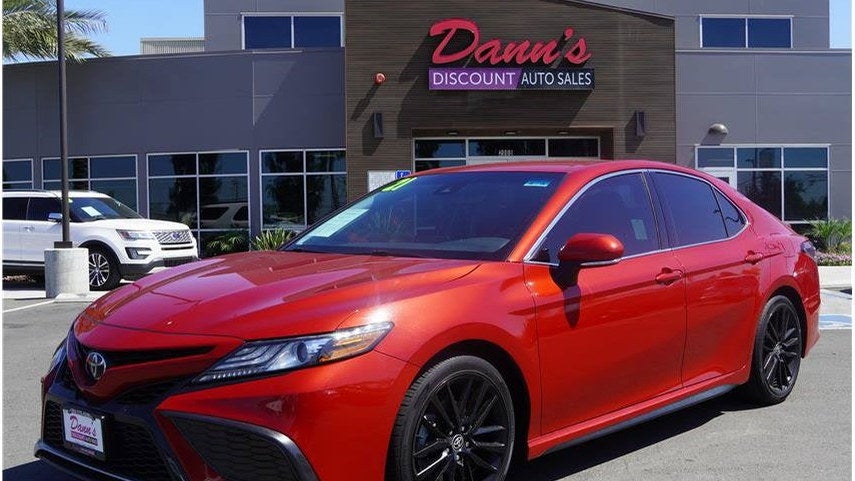
Refund season brings the widest selection of the year to Central Valley lots — and the most competition for it
Budget for the Costs Tax Season Does Not Cover
Refund money disappears fast when the tax and fee side of the deal comes as a surprise. California collects sales tax, registration, title, and license fees on a used vehicle purchase, and all of it is due at signing whether or not you financed the price itself, and local rates vary more than people expect. Combined sales tax runs 7.75% in unincorporated Tulare County, 8.25% in the city of Tulare, 8.5% in Visalia, and 9.25% in Porterville. On a $15,000 used car that is roughly $1,238 to $1,275 in tax in Tulare or Visalia, before DMV registration and title add several hundred dollars more. If the entire refund goes to the down payment, you still need something behind it — a walkthrough of the full cost stack is in this first-time used car buyer's guide.
Two federal changes are worth knowing before you build a tax-season budget around a break that no longer applies to used cars. The auto loan interest deduction in effect for tax years 2025 through 2028 lets qualifying buyers deduct up to $10,000 of car loan interest, but only on new vehicles with final assembly in the United States — used vehicles are excluded outright, even though they are new to you, and the deduction phases out above $100,000 of modified adjusted gross income for single filers. Separately, the $4,000 previously-owned clean vehicle credit ended for vehicles acquired after September 30, 2025, so a used EV bought in 2026 no longer earns a federal credit.
California Sales Tax
From 7.75% in unincorporated Tulare County up to 9.25% in Porterville, calculated on the sale price rather than the amount you finance
Registration and Title
California DMV registration, title, and license fees typically add several hundred dollars and are collected at the time of purchase
Insurance and First Payment
Full coverage is required on any financed vehicle, and the first premium plus the first monthly payment both arrive within weeks of delivery
A workable rule for refund season: earmark the bulk of the refund for the down payment, then hold back $500 to $1,000 for tax, fees, and the first insurance premium. Vehicles purchased from Dann's Discount Auto Sales also include a free 90-day warranty, which takes some early repair risk off the table while you rebuild that cushion.
Tax Season Car Buying Mistakes That Cost You Money
The most expensive tax season mistake is letting the refund set the price ceiling. A $3,276 refund does not mean you should shop $3,276 higher than you would have in November — it means you can put $3,276 down on the car you were already planning to buy. Everyone in the transaction knows refunds are coming, and the buyers who come out ahead treat that money as loan reduction rather than extra purchasing power.
The second is shopping in the crowd unprepared. Late February through early April is the tightest inventory of the year in the Central Valley, and walking in without a pre-approval, a trade estimate, or a payment target means making decisions under pressure with fewer cars to choose from. All three of those can be settled in advance, for free, while your refund is still processing.
Do Not Send the Entire Refund to the Down Payment
Refund season and repair season overlap. If every dollar goes into the down payment, the first unexpected expense — a tire, an insurance deductible, a slow stretch during the agricultural off-season — ends up on a credit card at a worse rate than your car loan. Holding a few hundred dollars back for tax, fees, and the first premium is almost always a better structure than maximizing the amount down.
Finally, do not assume the refund has to be spent on a car at all. If your current vehicle is reliable and the money would do more as an emergency fund or as a payoff on higher-interest debt, that is a legitimate answer. Tax season is the best time to buy a used car in CA only if buying one was already the right move.
Why the Dealership You Choose Matters More in Tax Season
In a tight February market, the difference between dealerships is not the number on the windshield — it is whether they have the vehicle you need and a lender who will approve you for it. Inventory depth and lender breadth both matter more when supply is sitting at its lowest point of the year.
A lot tied to one lender has to fit you into that lender's box. One working across banks, credit unions, and in-house programs can shop the same application until it finds the structure that needs the least cash from you, which is precisely the flexibility a modest refund requires. Local reputation cuts the same direction: a family business that sees the same households for their second and third vehicles has every reason to structure a payment you can actually keep up with.
Dann's Discount Auto Sales has been family-owned since 2008 with three lots serving the region — a used car dealership in Tulare, a used car dealership in Visalia, and a used car dealership in Hanford. The finance team works across a broad lender network including credit union direct lending through CUDL, plus programs for first-time buyers, credit rebuilders, ITIN purchasers, and Buy Here Pay Here customers — which is why the refund conversation there starts with your situation instead of a fixed percentage.
They also take the logistics off your plate with free vehicle delivery in Tulare County within 200 miles, which is worth something in March when a Saturday afternoon on any Valley lot is the busiest hour of the week.
Put Your Refund to Work Before the Rush
Tax season is not the cheapest time to buy a used car in California, but for most Central Valley families it is the only time the down payment exists. Handled well — filed early, pre-qualified before the money lands, refund applied to the loan rather than to a bigger car — it is the strongest position a budget-conscious buyer occupies all year.
Start with the numbers instead of the vehicle. Enter a comfortable monthly payment and the refund amount you expect, and you will know your realistic price range in a couple of minutes, well before the February crowd arrives.
Dann's Discount Auto Sales has been helping Tulare, Visalia, and Hanford families turn refunds into reliable transportation since 2008, at every credit level and every down payment amount. Bring your number, and their team will show you what it buys.