

High mileage and worn out are two different things. When you are buying a used car with high mileage, the odometer is a single data point — maintenance history, the kind of driving those miles came from, and the vehicle's condition right now tell you far more about the next 100,000 miles than the number on the dash. A documented 145,000-mile Toyota is regularly the safer purchase over a neglected 70,000-mile bargain.
Plenty of shoppers still treat 100,000 miles as a wall. It stopped being one years ago — the average vehicle on U.S. roads has climbed to a record 12.8 years old, and well-kept engines routinely clear 200,000. What follows is a practical checklist: the records to demand, the parts that fail on high-mileage vehicles, what a test drive should reveal, and how financing works past the 100,000-mile mark. If you want a broader walkthrough first, this companion guide on how to evaluate a used car's condition pairs well with it, and higher-mileage stock is where most of the inventory of used vehicles under $20,000 actually lives in 2026.
The Short Answer
Roughly 100,000 miles and up is treated as high mileage, because U.S. drivers average about 13,500 miles a year and Californians about 11,400. But records beat the odometer. Look for documented oil changes, proof the timing belt was replaced on schedule, a transmission that shifts cleanly cold and warm, no fluid leaks, a rust-free undercarriage, working air conditioning, and a pre-purchase inspection you paid for yourself. Any one of those matters more than 20,000 miles on the display.
What Counts as High Mileage in 2026?
The working definition is simple arithmetic. Americans covered an average of 13,482 miles per driver in the most recent Federal Highway Administration data, while California drivers averaged 11,409 — lower than the national figure, though Central Valley commuters running Highway 99 between Tulare, Visalia, and Fresno often blow past both. Multiply the yearly average by the vehicle's age and you get its expected odometer reading.
Run that math on a ten-year-old car and you land near 120,000 to 135,000 miles. Anything meaningfully below that is low mileage for its age; anything well above it is high. What separates a good high-mileage buy from a bad one is not the gap itself but the explanation for it. A retired commuter's sedan with 160,000 freeway miles and a folder of receipts has aged more gently than a delivery car with 90,000 stop-and-go miles and no service history at all.
The 12,000-Mile Yardstick
Roughly 12,000 to 14,000 miles per year is normal use — compare the odometer against the model year before you judge the number
Highway Miles Age a Car Slower
Steady freeway driving is far easier on the transmission, brakes, and suspension than constant city stops, so two cars with identical readings are rarely equal
Low Miles Can Hide Old-Car Problems
A twelve-year-old vehicle with 55,000 miles often needs belts, hoses, tires, and seals anyway — rubber and fluids age on the calendar, not the odometer
Vehicle type changes the equation too. Body-on-frame trucks and large SUVs are engineered for load and distance, which is why a 170,000-mile pickup can have more usable life left than a small car at the same reading. That is worth remembering if you are shopping used pickup trucks near Visalia and Tulare for ranch work, hauling, or a job site commute.
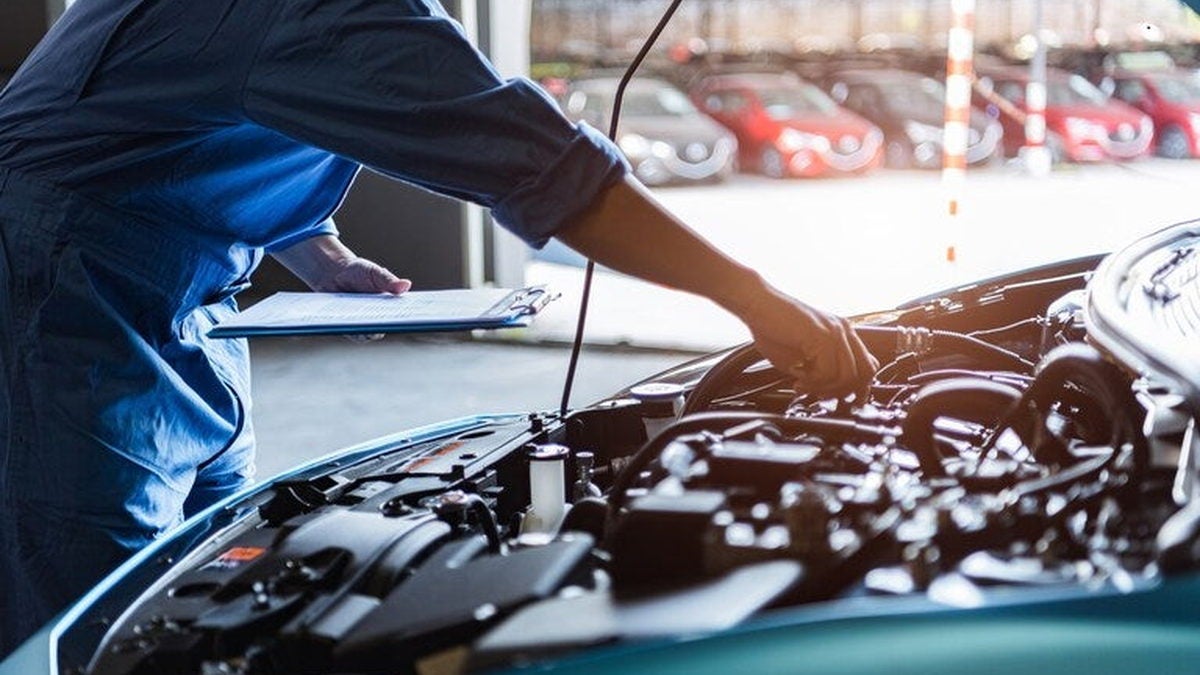
Dann's Discount Auto Sales stocks higher-mileage vehicles priced for Central Valley budgets, with an on-site service department behind them
How Many Miles Is Too Many for a Used Car?
There is no universal cutoff, which is why the honest answer frustrates people. J.D. Power's shopping guidance suggests treating 200,000 miles as a practical upper limit for most buyers, and that is a reasonable place to draw the line — not because engines quit at 200,000, but because past that point the repair bills usually outpace what the vehicle is worth. The better question is how many affordable miles are left, and what each one will cost you.
Market conditions make higher-mileage vehicles more relevant than they were a few years ago. The average used-vehicle listing price hit $27,028 in July 2026, up about 6% year over year, and vehicles priced under $15,000 made up only 16.4% of dealer inventory — down from 20.6% a year earlier, according to Cox Automotive. Older stock has been appreciating fastest: listing prices for vehicles 15 years and older rose 13.9%, against 3% for vehicles under five years old. Affordable transportation now lives in the higher-mileage bands, so knowing how to buy there is a real advantage.
| Odometer Range | What It Usually Means | What to Scrutinize Hardest |
|---|---|---|
| Under 100,000 | Still inside most factory service schedules | Accident history, tire and brake life, deferred maintenance |
| 100,000 – 150,000 | The value sweet spot on most models | Timing belt records, transmission service, suspension wear |
| 150,000 – 200,000 | Workable on proven platforms with records | Oil leaks, cooling system, motor mounts, wheel bearings |
| 200,000 – 250,000 | Only worth it on a documented, reliable nameplate | Compression and engine health, rust, catalytic converter |
| Over 250,000 | Cash purchase territory, not a financed one | Everything — expect to budget for repairs immediately |
Use the table as a lens, not a rulebook. A 190,000-mile Tacoma with dealer service records can be a stronger buy than a 120,000-mile compact that has never had a transmission service. Match the mileage band to your budget for repairs, then let condition break the tie.
Service Records Beat the Odometer Every Time
Ask for maintenance history before you ask for a price. Receipts tell you whether oil changes happened on schedule, whether the coolant and transmission fluid were ever replaced, and whether the last owner fixed problems or waited them out. A high-mileage vehicle with a paper trail is a known quantity. One without any documentation is a gamble you should price accordingly.
Pull a vehicle history report as well. A report will not show maintenance the owner did in their driveway, but it does surface title branding, reported collisions, odometer inconsistencies, and how many owners the car passed through — and a long service history at consistent intervals is a genuine green flag. Single-owner vehicles are usually the cleanest paper trail available, which is why it is worth browsing CARFAX one-owner used cars before widening your search.
Ask About the Timing Belt First
Engines that use a rubber timing belt typically call for replacement somewhere between 60,000 and 105,000 miles depending on the manufacturer. On an interference engine, a snapped belt can bend valves and destroy the motor — turning a cheap car into scrap in one afternoon. If the vehicle you are considering has a belt rather than a chain and there is no receipt showing it was replaced, treat the job as a cost you will absorb soon and negotiate with that in mind.
Missing records do not automatically disqualify a car. They simply move the burden onto inspection: without documentation, the only way to judge a 150,000-mile engine is to have someone qualified look at it and to assume the maintenance items are due rather than done.
The High-Mileage Inspection Checklist
A pre-purchase inspection is the best money you will spend on a high-mileage vehicle. RepairPal currently estimates the labor for one at roughly $186 to $273 — a rounding error against a transmission replacement, and the fastest way to turn guesswork into a repair list you can negotiate against. If a seller resists an independent inspection, that answer is information all by itself.
You can still learn a lot in ten minutes on the lot before anyone puts the car on a lift. Work through the vehicle in three passes — engine bay, underbody and exterior, then cabin and electronics — and take photos of anything you want a mechanic to confirm later.
Under the Hood
Check oil level and color, look for crusted leaks around the valve cover and oil pan, inspect belts for cracking, squeeze hoses for softness, and confirm the coolant is clean rather than rusty or oily
Underbody and Exterior
Look for fresh drips, torn CV boots, a rattling exhaust, uneven tire wear that hints at alignment or suspension trouble, and mismatched paint or panel gaps that suggest past collision work
Cabin, Electronics, and A/C
Test every window, lock, and seat adjuster, watch for dash warning lights that never go out, and run the air conditioning until it blows cold — a weak compressor is miserable and expensive during a Valley summer
Have the seller scan for stored trouble codes, including pending ones a cleared dashboard would hide, and check the VIN for open recalls at NHTSA's free lookup before you sign anything. If a code comes back on a car you otherwise like, an auto diagnostics check in Tulare will tell you whether you are looking at a sensor or a symptom of something structural.
What a Test Drive Reveals That a Listing Never Will
Insist on a cold start. A vehicle that has been idling in the front row for twenty minutes hides the exact behavior you need to see — startup rattle, blue or white exhaust smoke, a rough first minute, a check engine light that clears once the engine warms. Ask that the car be left untouched until you arrive, and pay attention to the first thirty seconds after the key turns.
Then drive it the way you actually live. Get it to freeway speed on 99 or 198, hold 65 for a few minutes, and listen for droning wheel bearings or vibration through the wheel. Brake firmly once from speed in an empty stretch and feel for pulsing or pulling. Take a rough side street to hear what the suspension does over bumps. High-mileage problems announce themselves under load, not in a parking lot.
Start It Cold
Listen for knocking, ticking, or timing chain rattle in the first seconds and watch the tailpipe — smoke on startup points to worn valve seals or piston rings
Watch the Transmission
Shifts should be smooth and prompt in both directions; flaring, clunking, hesitation, or slipping at highway speed is the most expensive warning sign on any high-mileage vehicle
Brakes, Steering, and Alignment
A pulsing pedal, a pull to one side, vague steering, or a wheel that sits off-center all point to wear items you should price before you agree to anything
Trust your ears more than the seller's explanation. A hum that rises with speed, a groan when turning the wheel at low speed, or a rhythmic tick that follows engine RPM each mean something specific, and this rundown of engine noises you should never ignore is a useful primer before you go out driving.
High-Mileage Vehicles That Tend to Keep Going
Longevity is not evenly distributed across nameplates. iSeeCars analyzed hundreds of millions of vehicles and found that only 4.8% of them reach 250,000 miles — but certain models clear that bar at six to eight times the industry rate, with Toyota taking ten of the top twenty-five spots. If you intend to buy at 130,000 miles and drive to 220,000, starting with a platform that has a proven record is the single highest-leverage decision you make.
The list below is a sample of the standouts, and the practical takeaway for Central Valley shoppers is straightforward: heavy-duty trucks and large Toyota SUVs dominate the top of the longevity rankings, while dependable commuter sedans hold their own at a fraction of the purchase price.
| Vehicle | Odds of Reaching 250,000 Miles | What That Tells You |
|---|---|---|
| Ram 3500 | 39.7% | Heavy-duty trucks are built for decades of work, not just years |
| Toyota Sequoia | 39.1% | The longest-lasting SUV, and eight times the 4.8% industry average |
| Toyota Tacoma | 25.3% | A mid-size truck that stays valuable well past 150,000 miles |
| Honda Civic | 10.9% | Among the top passenger cars for longevity at a commuter price |
Reputation is a starting filter, not a guarantee — a neglected Camry will still fail before a maintained Kia. Once you have picked a platform with good bones, shop the individual car's records and condition. Sedans like the used Toyota Camry inventory near Visalia and Tulare and the used Honda Civic selection are the classic high-mileage commuter picks, while families needing space tend to start with used SUVs near Tulare and Visalia.
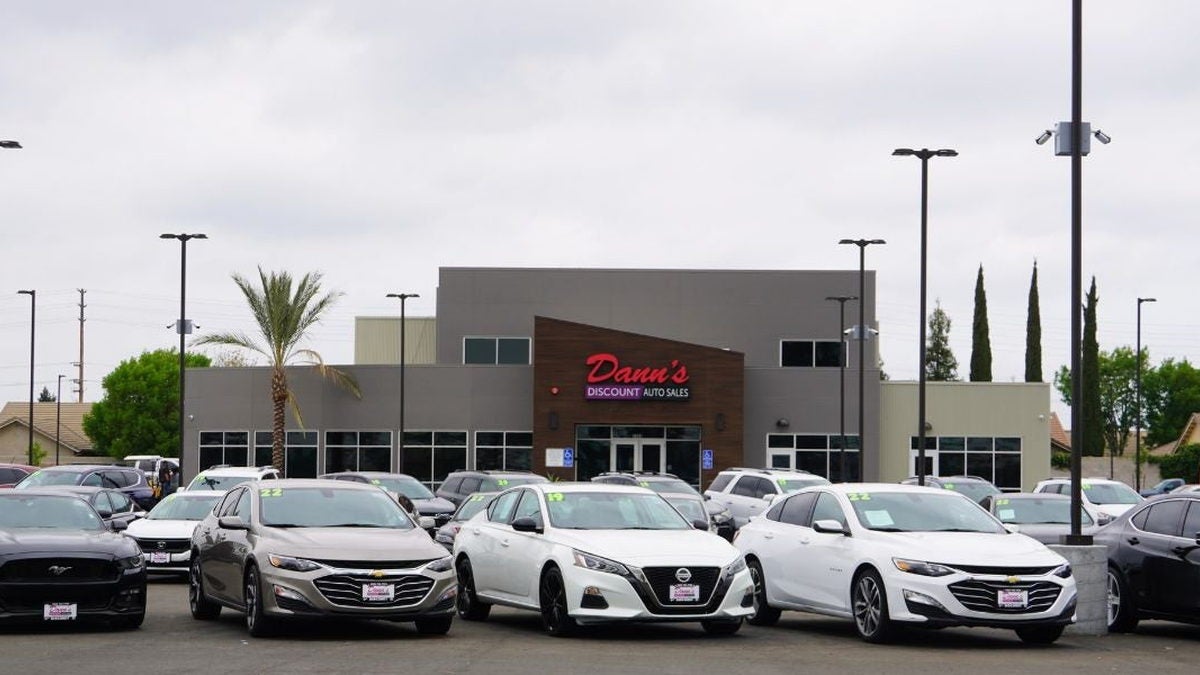
Three Central Valley lots, an on-site service department, and financing that works at every credit level
Budget for What a High-Mileage Car Costs to Own
The purchase price is only the entry fee. Assume the first ninety days will include catching up on whatever the previous owner deferred — an oil and filter change, an air filter, wiper blades, possibly tires or brake pads. Setting aside a repair reserve of around $1,000 before you buy is the difference between a minor annoyance and a car sitting in the driveway waiting for a paycheck.
California adds one item shoppers from other states forget. Gasoline vehicles from 1976 forward need a biennial smog check once they are more than eight model years old, and a dealer selling you a used car is required to hand over a valid smog certification at the sale, so a high-mileage vehicle that cannot pass is a problem you should never inherit. Vehicles less than four model years old are exempt at transfer, with the buyer paying a smog transfer fee instead — which almost never applies in the high-mileage segment.
The First 90 Days
Fresh oil and filter, an inspection of brakes and tires, and any fluid the records do not account for — start the ownership clock with a clean baseline
The 100,000-Mile Service List
Timing belt and water pump where applicable, spark plugs, coolant, transmission fluid, and serpentine belt are the usual big-ticket items due in this range
Tires, Brakes, and Batteries
These are consumables, not defects; price a set of tires and a brake job into your offer instead of being surprised by them in month three
Where you get that work done matters to the total cost. Buying from a dealership with an on-site auto service department in Tulare means the shop that inspected the vehicle is the shop maintaining it, and the vehicle's history keeps building in one place rather than scattering across receipts nobody can find later.
Financing and Protecting a High-Mileage Purchase
Lenders care about mileage, and this is where a high-mileage purchase gets complicated for buyers who assume any car can be financed. Many banks and credit unions cap standard used-vehicle loans around 100,000 to 150,000 miles or roughly ten model years, then route anything beyond that into extended-mileage programs at higher rates. Experian's guidance cites examples starting near 7.44% APR for vehicles up to ten years old carrying more than 100,000 miles, with rates climbing from there as age and mileage increase.
The practical fix is a dealership with a wide lender network rather than a single funding source, plus a shorter term so you are not still paying at 230,000 miles. It also helps to know your numbers before you shop: a look at the used car financing department, a realistic read on how much a down payment on a used car runs, and, if your credit history is working against you, programs built for it such as bad credit car loans in Tulare and Visalia or in-house buy here pay here financing in Tulare.
California's Two-Day Cancellation Option
Under the state's Car Buyer's Bill of Rights, dealers must offer a contract cancellation option agreement on used vehicles priced under $40,000 — a purchased right to return the car within two days. The option fee is capped by price band at $75 for vehicles up to $5,000, $150 from $5,001 to $10,000, $250 from $10,001 to $30,000, and 1% of the price above that. Restocking fees are capped as well, and the option fee is deducted from them. Dealers are also required to provide an inspection report on used vehicles, so ask for it.
Finally, think about coverage. A short warranty or service contract turns the scariest part of a high-mileage purchase — an unknown major failure in month two — into a known quantity. Every vehicle from Dann's Discount Auto Sales includes a free 90-day warranty, which buys you time to rebuild your repair cushion after the down payment.
Why Where You Buy a High-Mileage Car Matters
Two dealerships can list the same year, model, and mileage at similar prices and hand you very different vehicles. The difference is reconditioning. Some lots move higher-mileage trade-ins straight to the front row; others service them, address the obvious wear items, and can tell you what was done. Asking a simple question — what did you fix on this car before you put it out here? — separates the two quickly.
Accountability is the other variable. A dealership that depends on repeat business and word of mouth in a county the size of Tulare has a strong incentive not to sell you something that dies in six weeks, because the same families come back for their second and third vehicles and talk to their neighbors in between.
Dann's Discount Auto Sales has been family-owned since 2008, with three lots serving the region — a used car dealership in Tulare, a used car dealership in Visalia, and a used car dealership in Hanford. Because the service department is in-house, higher-mileage inventory gets looked at by the same technicians who will maintain it afterward, and the staff can talk specifics about a given vehicle instead of pointing at the window sticker.
They also take the logistics off your plate with free car delivery across Tulare County, so a car you found on your lunch break does not require a second trip across the Valley to bring home.
Shop High Mileage with Confidence
Buying a used car with high mileage is not a compromise when you do it deliberately. Check the records, verify the timing belt, pay for an inspection, drive it cold, and budget for the maintenance the odometer implies — then let the savings work for you instead of against you.
Start by pinning down what you can comfortably spend each month, because that number decides how much mileage you actually need to accept. A couple of minutes with a payment estimate will tell you whether the 90,000-mile version is within reach or the 140,000-mile one is the smarter play.
Dann's Discount Auto Sales has been helping Tulare, Visalia, and Hanford drivers buy dependable higher-mileage vehicles since 2008, at every credit level. Bring the vehicle you are considering and the questions from this guide, and their team will walk the car with you.